

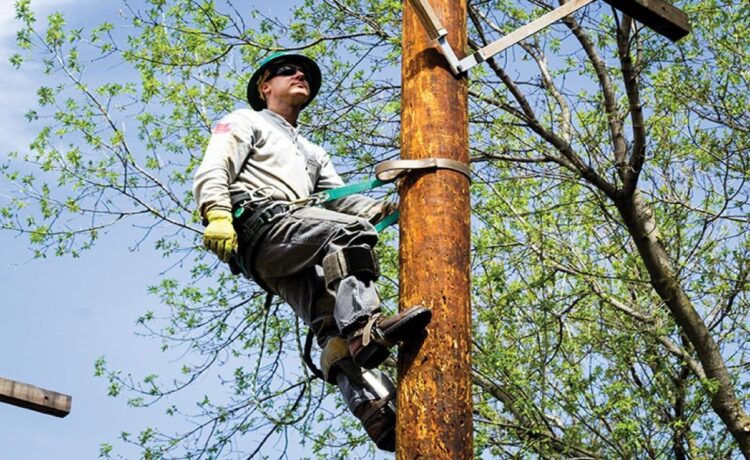
Down here in Texas, we don’t just talk about the weather; we live in it. When a blue norther blows through or a summer thunderstorm decides to play tag with our power grid, nobody is sitting around waiting for a miracle. They’re waiting for a lineman. But standing on a pole at 2:00 AM isn’t just about grit-it’s about the gear strapped to your legs and the lineman tools in your pouch.
If you’re a green apprentice or a seasoned hand who’s seen more sunrises from a crossarm than from a kitchen table, you know that your climbers are your foundation. Choosing between steel, aluminum, and titanium isn’t just a fashion choice; it’s a long-term investment in your knees, your back, and your career longevity.
The Great Material Debate: Steel vs. Aluminum vs. Titanium
Think of your climbers like a pair of boots. If they’re too heavy, you’re dragging anchors by noon. If they’re too flimsy, you don’t trust them when you’re leaning back into your belt.
- Steel Climbers: These are the old faithfuls. They are incredibly durable and cost-effective. If you’re just starting out and watching your wallet, steel gets the job done. However, they are heavy. After eight hours of “walking the wood,” that extra weight starts to feel like lead.
- Aluminum Climbers: This is the “Goldilocks” zone for many. Aluminum offers a significant weight reduction without a massive price jump. They are plenty durable for daily distribution work and significantly reduce the strain on your hips.
- Titanium Climbers: These are the Ferraris of the climbing world. They are the lightest material available and incredibly strong. If you’re a “storm chaser” or doing high-volume climbing, titanium is worth every penny to save your joints from premature wear and tear.
The Daily Carry: Essential Hand Tools and the Lineman Tools Kit
Climbing is only half the battle; once you’re up there, you need to perform. A standard lineman tools kit is essentially a portable workshop. You aren’t just carrying a “wrench”; you’re carrying a lifeline.
Daily life involves high-torque tasks that require specialized hand tools. For instance, Lineman Impact Wrenches have transitioned from luxury to necessity. These battery-powered beasts save your wrists from the repetitive stress of hand-tightening bolts on crossarms. Then you have Crimpers-whether manual or hydraulic-used to ensure every connection is solid enough to withstand a hurricane.
But let’s talk about the “Long Reach” safety. The electrical hot stick (or the classic shotgun stick) is your primary barrier between life and a very bad day. Whether you’re pulling fuses or testing for voltage, the hot stick is the most critical extension of your arm.
The Science of Staying Healthy: Why Ergonomics Matters
We often act like being “tough” means ignoring pain, but in the utility industry, that’s a fast track to disability. This is where the science of ergonomics comes in. Ergonomics is the study of designing equipment to fit the human body, rather than forcing the body to fit the tool.
1) How do ergonomics reduce injury?
Ergonomics reduces injury by minimizing the physical stress placed on the body. By using tools that align with your natural grip and posture, you prevent “micro-traumas.” When a tool is ergonomically designed, it requires less force to operate, which means your muscles and tendons aren’t being pushed to their breaking point every single day.
2) What are some ergonomic considerations when selecting tools?
When you’re picking out your next set of hand tools, look for:
- Handle Diameter: It shouldn’t be so thick that you can’t wrap your hand around it, nor so thin that you have to “death grip” it.
- Vibration Dampening: Especially for Lineman Impact Wrenches, look for models that absorb shock so your elbow doesn’t have to.
- Weight Distribution: A balanced tool feels lighter than it actually is.
3) The science of equipment design to reduce fatigue.
Equipment design uses “anthropometric data”-the measurements of human bodies-to create shapes that distribute pressure evenly. For example, modern climber pads are now contoured to the shin to prevent “pressure points” that lead to nerve damage. Reducing fatigue isn’t just about comfort; a tired lineman is a lineman who makes mistakes.
4) What are the ergonomic risk factors?
In the utility world, we face the “Big Three” risk factors:
- Repetition: Doing the same motion (like crimping) hundreds of times.
- Force: Needing massive muscle power to break a bolt loose.
- Awkward Posture: Reaching over your head while belted into a pole.
The Reality of the Job: Facts and Friction
Did you know that according to industry studies, the average lineman carries nearly 30 to 50 pounds of gear when fully kitted out? That is a massive load on the musculoskeletal system. It’s why the industry has seen a 10% growth in jobs recently-we need more hands, but we also need those hands to stay healthy.
Using an electrical hot stick isn’t just about reaching high-voltage lines; it’s about leverage. A well-balanced shotgun stick allows you to operate switches with minimal shoulder strain. If you’re using outdated, heavy fiberglass sticks, you’re essentially doing a weighted shoulder press every time you go to work.
Adapting to Your Career Stage
- The Apprentice: You’re young and strong, but don’t be a hero. Start with a high-quality lineman tools kit and focus on form. If you can afford aluminum climbers, get them. Your 40-year-old knees will thank you later.
- The Journeyman: This is where you upgrade to the “pro” gear. Invest in battery-powered Crimpers and high-torque Lineman Impact Wrenches. At this stage, efficiency is the name of the game.
- The Veteran: You’re the mentor. You likely prefer the lightest gear possible-Titanium climbers and the most advanced ergonomic lineman hand tools. You know that work-positioning is more important than brute strength.
Conclusion
At the end of the day, being a lineman is one of the most respected and physically demanding jobs in America. Whether you’re working a 12-hour shift in the Texas heat or restoring power after a blizzard, your tools are your best friends. By choosing the right materials for your climbers-be it the ruggedness of steel or the featherweight strength of titanium-and prioritizing ergonomic lineman tools, you aren’t just doing your job; you’re ensuring you can keep doing it for years to come.
Stay safe, watch your “six,” and always check your hot stick before you reach for the sky.
Frequently Asked Questions (FAQs)
1. Is titanium really worth the extra cost over aluminum for climbers?
For most linemen, yes. If you climb daily, the weight reduction of titanium significantly lowers the risk of hip and knee fatigue. However, if you spend most of your time in a bucket truck, aluminum is a perfectly sufficient and more affordable middle ground.
2. Can I use standard impact wrenches for utility work?
It’s not recommended. Specialized Lineman Impact Wrenches are designed with high-voltage safety in mind and often feature a “bolt-thru” design specifically for long-thread utility bolts that standard automotive tools can’t handle.
3. How often should I inspect my electrical hot stick?
Every single time you use it. Look for cracks, deep scratches, or “carbon tracking” (black streaks). Even a small amount of dirt or moisture on a shotgun stick can conduct electricity, so keep them clean and dry.
4. What is the most important tool for a new apprentice?
Outside of safety gear, a high-quality pair of 9-inch lineman pliers (Klines) is the heart of your kit. You’ll use them for everything from cutting wire to hammering in staples.
5. How do ergonomic tools help with carpal tunnel syndrome?
Ergonomic tools often feature curved handles and “soft-grip” materials that reduce the need for a tight grip. This lowers the pressure on the median nerve in your wrist, which is the primary cause of carpal tunnel symptoms.