
Custom parts often solve problems that standard components cannot. Many industries require parts with specific dimensions, unique features, or materials that match a particular application. Even minor design changes can improve product performance, simplify assembly, and extend service life. Producing those parts requires a manufacturing process that follows detailed specifications without compromising quality. CNC machining services provide that level of accuracy while supporting both prototypes and production runs.
Here are the capabilities that make computer numerical control (CNC) machining a practical solution for producing high-quality custom components:
Meeting Precise Design Requirements
Every custom part begins with a design that reflects a specific purpose. Medical equipment, industrial machinery, aerospace systems, and consumer products all have different requirements. A manufacturing method must produce parts that match those designs with consistent accuracy.
Computer-controlled machining follows digital instructions to produce exact dimensions across multiple pieces. Tight tolerances become easier to maintain because each operation follows the same programmed path. This reduces variations that often appear with manual machining and minimizes fitment issues during assembly.
Supporting Complex Shapes and Features
Custom parts often include detailed pockets, curved surfaces, threaded holes, or intricate contours. Producing these features requires equipment that can handle multiple machining operations without sacrificing precision.
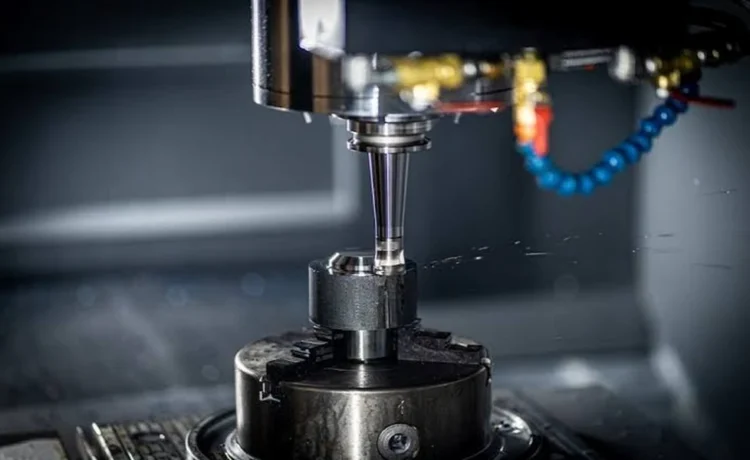
CNC milling allows manufacturers to create these complex geometries from solid material. Different cutting tools remove material step by step until the final shape matches the design. This process supports a wide range of industries because it accommodates simple brackets as well as highly detailed mechanical components.
The flexibility of the process also allows design updates without rebuilding production equipment. Revising the digital file keeps the next production run from proceeding with minimal interruption.
Working With Different Materials
Material choice has a direct impact on the performance of a custom part. Some applications require lightweight aluminum for reduced weight. Others depend on stainless steel for corrosion resistance or engineering plastics for electrical insulation.
Modern machining equipment supports a broad range of materials while maintaining dimensional accuracy. Manufacturers can focus on choosing materials based on strength, durability, heat resistance, or other project requirements instead of limiting choices because of manufacturing constraints.
This flexibility gives engineers greater freedom during product development. It also supports projects that require several material options for testing before final production.
Helping Projects Move From Prototype to Production
Custom manufacturing rarely ends with a single prototype. Testing often leads to design refinements before larger production volumes begin. A machining process that supports both stages simplifies the transition.
The same programming methods used for prototype production can continue into low-volume or larger manufacturing runs. Consistent machining methods help maintain part quality throughout the project. Engineering teams also receive production feedback that supports future design improvements.
Choose Reliable CNC Machining With Rahi Engineering
Custom parts demand precision, consistency, and manufacturing expertise from the first prototype to the final production run. Rahi Engineering delivers high-quality CNC machining solutions tailored to exact project requirements, helping manufacturers achieve reliable results across a wide range of industries.
Visit our website today to learn more about our CNC machining capabilities and discover how our team can support your next custom part production project.